



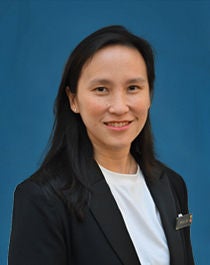
Clin Asst Prof Jill Lee Cheng Sim
MBChB, MSc (Clinical Education), MRCOG, MRCP, FAMS
Senior Consultant
 KK Women's and Children's Hospital
Specialty: Obstetrics & Gynaecology
Conditions Treated By This Doctor
Abdominal Sacropolpopexy
Antenatal and Postnatal Care
Burch Colposuspension
Endometriosis
Family Planning
Fibroid
Menstrual Disorders/Abnormal Vaginal Bleeding
Ovarian Cyst
Overactive Bladder
Pelvic Floor Disorders
Pelvic Floor Repair
Pelvic Organ Prolapse
Pregnancy and associated conditions
Sacrospinous Fixation
Stress Urinary Incontinence
TVT Continence Surgery
Total Abdominal Hysterectomy
Urinary Incontinence
Urinary Tract Infection
Uterine Fibroids/Uterine Fibroid Embolisation
Utero Vaginal Prolapse
Vaginal Hysterectomy
Voiding Disorders in Women

Clinical Appointments

Senior Consultant
SingHealth Duke-NUS Pelvic Floor Disorders Centre

Senior Consultant
Urogynaecology Centre
Academic Appointments

Adjunct Assistant Professor
About Doctor
Dr Jill Lee is a Senior Consultant Obstetrician, Gynaecologist and Urogynaecologist at KK Women’s and Children’s Hospital with special interest in complex pelvic floor disorders and obstetric anal sphincter injuries. She is the clinical lead for the combined pelvic floor and perineal clinic services at KK Women’s and Children’s Hospital which she helped to establish in 2020. For her clinical service, she has been awarded the Singapore Health Quality Service Award and Service from the Heart Award at KK Women’s and Children’s Hospital on several occasions.
Alongside her clinical duties, Dr Lee is actively involved in medical education, holding teaching, research and curriculum development roles at both undergraduate and postgraduate levels. She is currently Programme Director of the SingHealth Obstetrics and Gynaecology Residency Programme, Clinical Assistant Professor at Duke-NUS Medical School and Adjunct Assistant Professor at Lee Kong Chian School of Medicine. She has twice received the Best Faculty Award at the SingHealth RISE Awards.
She presently serves as a Council Member of the Obstetrical and Gynaecological Society of Singapore (OGSS) and on several committees within SingHealth in the areas of technology enhanced learning and innovation, namely in the Academic Medicine Education Institute (AMEI) and Academic Medicine Innovation Institute (AMII).
Dr Lee is actively involved in clinical research and is a past recipient of the SingHealth Duke-NUS O&G ACP Research Grant and the SingHealth Duke-NUS OBGYN ACP Education Support Programme Grant. During the COVID-19 pandemic, she collaborated with the International Society of Ultrasound in Obstetrics and Gynaecology (ISUOG) to co-author international guidance and recommendations for COVID-19 in pregnancy to help both patients and staff caring for obstetric and gynaecological patients. Her present research interests lie in complex multicompartmental pelvic floor disorders, obstetric anal sphincter injuries, pregnancy-related pelvic floor dysfunction and innovations in postgraduate teaching and learning.
Languages Spoken
- English
- Chinese
Education and Training
- FAMS (Singapore) 2024
- MRCOG (UK) 2015
- MSc Clinical Education (Edinburgh) 2014
- MRCP (UK) 2009
- MBChB (Edinburgh) 2007
Professional Appointments and Committee Memberships
- Senior Consultant, Department of Urogynaecology, KK Women’s and Children’s Hospital 2025 – Present
- Programme Director, SingHealth Obstetrics and Gynaecology Residency Programme 2025 – present
- Clinical Assistant Professor, Duke-NUS Medical School 2021 – present
- Adjunct Assistant Professor, Lee Kong Chain School of Medicine, Nanyang Technological University 2022 – present
- Clinical Lecturer, Yong Loo Lin School of Medicine, National University of Singapore, 2018 – present.
- Member, “LEAP”, Learning & Experimenting with AI Partnership, SingHealth-Duke NUS Academic Medicine Education Institute 2025 – present
- Member, Technology and Innovation Sub-Committee, SingHealth College of Clinical Medicine 2023 – present
- Member, Office of Digital Integration Medical Innovation & Care Transformation, KK Women’s and Children’s Hospital 2024 – present
- Subject Matter Expert for Innovation Grant Proposals, SingHealth Duke-NUS Academic Medicine Innovation Institute, 2024 – present
Awards
- Outstanding Faculty Award, SingHealth RISE 2019 and 2020
- Star Award, Singapore Health Quality Service Award, 2022
- Gold Award, Singapore Health Quality Service Award, 2022
- Long Service Award (10 years), KK Women’s and Children’s Hospital, 2021
- Silver Award, Singapore Health Quality Service Award, 2020
- Service from the Heart Award, KK Women’s and Children’s Hospital, 2013 and 2019
Research Trials/Clinical Trials
- A randomized, placebo-controlled, double-blind, parallel-group, multi-centre, proof-of-concept study to assess the efficacy and safety of BAY 1817080 in patients with overactive bladder (OAB) over a 12-week treatment period (OVADER). Site Principal Investigator 2021-2022
Publications
- A New Combined Urogynecology and Colorectal Surgery Pelvic Floor Clinic-1 Year On. Mak SA, Sivarajah SS, Ong SM, Chong CXZ, Chua HL, Lee JCS. Int Urogynecol J. 2025;36(2):331-338.
- The Treatment Response and Safety Profile for Mirabegron in Women With Overactive Bladder and Hypertension. Neo JE, Lui MK, Wong YWY, Lee JCS. Cureus. 2025; 17(5): e84855.
- Deeply Infiltrating Endometriosis (DIE) No More: Dienogest as a Game Changer in Rectovaginal Endometriosis. Tan AWM, Ho XY, Lee JCS. Cureus. 2025; 17(6): e85165.
- Evaluation of the Levonorgestrel-Releasing Intrauterine System Following Difficult Insertion in Perimenopausal Women: A Case Report. Lim KH, Lee JCS. Cureus. 2025;17(8):e90186.
- Long-Term Outcomes of Restorelle® Direct Fix Anterior Mesh in the Treatment of Pelvic Organ Prolapse. Goh YM, Lim SH, Chua HL, Han HC, Lee JCS. Cureus. 2024;16(6):e63513.
- Metastatic signet-ring carcinoma to the uterus presenting as an endometrial polyp. Amin R, Wu CY, Lee JCS, Ananta MG. BMJ Case Rep 2023; 16(5): e254190.
- Colovaginal fistula: an uncommon complication after vaginal hysterectomy and pelvic floor repair with mesh surgery. Tan YR, Lee JCS, Sivarajah SS, Chong CXZ, Chua HL, Bhutia K. Cureus, 2023; 15(12): e51221.
- Impact of Coronavirus Disease-19 (COVID-19) pandemic on obstetrics and gynecology residents’ case logs. Cheah GHS, Lee JCS, LK Tan, M Mathur. South East Asia Regional Association for Medical Education (SEARAME). 2023; 17 (1).
- Resilience and emotions of frontline obstetrics and gynaecology healthcare workers during the novel coronavirus-2019 (COVID-19) pandemic: Cross-sectional retrospective descriptive study. Lau HCQ, Soe NN, Chua MSQ, Lee JCS, Sulaiman S. Singapore Med J 2023. Epub ahead of print.
- Short-term voiding patterns after vaginal hysterectomy and pelvic floor repair. Lim PT, Lee JCS, Han HC. Int J Reprod Contracept Obstet Gynecol. 2022;11(4):1038-1043
- Problems with early systematic reviews: The case of coronavirus disease 2019 (COVID-19) in pregnancy. Ang XL, Chonkar SP, Chua MSQ, Sulaiman S, Lee JCS. Maternal and Child Health Journal. 2021; 25(1): 38-41.
- The Effect of Luteinising Hormone Suppression in In Vitro Fertilisation Antagonist Cycles. Goh JP, Lee JCS, Chan JKY, Allen JC, Ng XW, Nadarajah S, Phoon JWL, Liu S. Reprod Sci. 2021; 28: 3164-3170. JIF: 3.109.
- Trainee doctor clinics after 24-hour shifts: Effects on patient satisfaction and prescription errors. Chin CY, Tan SQ, Kui SL, Gunasegaran K, Lee JCS. TAPS 2021; 6(4): 26-36.
- ISUOG Interim Guidance on 2019 novel coronavirus infection during pregnancy and puerperium: information for healthcare professionals. Poon LC, Yang H, Lee JCS, Copel JA, Leung TY, Zhang Y, Chen D, Prefumo F. Ultrasound Obstet Gynecol 2020;55(5):700-708.
- ISUOG Safety Committee Position Statement on use of personal protective equipment and hazard mitigation in relation to SARS-CoV-2 for practitioners undertaking obstetric and gynecological ultrasound. Abramowicz JS, Basseal JM, Brezinka C, Dall’Asta A, Deng J, Harrison G, Lee, JCS, Lim A, Maršal K, Miloro P, Poon LC, Salvesen KÅ, Sande R, Ter Haar G, Westerway SC, Xie MX, Lees C. Ultrasound Obstet Gynecol. 2020;55(6):886-891.
- ISUOG Interim Guidance on coronavirus disease 2019 (COVID-19) during pregnancy and puerperium: information for healthcare professionals - an update. Poon LC, Yang H, Dumont S, Lee JCS, Copel, JA, Daneels L, Wright A, Da Silva Costa F, Leung TY, Zhang Y, Chen D, Prefumo F. Ultrasound Obstet Gynecol. 2020;55(6):848-862.
- From the frontline of COVID-19 – How prepared are we as obstetricians: a commentary. Chua MSQ, Lee JCS, Sulaiman S, Tan HK. BJOG. 2020; 127(7):786-788.
- Authors’ response Re: From the frontline of COVID-19 – How prepared are we as obstetricians: a commentary. Chua MSQ, Lee JCS, Sulaiman S, Tan HK. BJOG 2020; 127(8): 1041.
- One hospital department with three affiliated medical schools - yea or nay? A cross-sectional survey of students and tutors. Lee JCS, Li M, Kam L, Tan HH, Tan KH, Kathirvel R. MedEdPublish. 2020;9:93. https://doi.org/10.15694/mep.2020.000093.1
- COVID-19 in Singapore: Graduate medical education in the face of a global pandemic. Yong X, Chew CW, Chin CY, Ong CYM, Tan HK, Lee JCS. MedEdPublish. 2020. 9, [1], 189, https://doi.org/10.15694/mep.2020.000189.1.
- Educating medical students: Are we doing it right? Li M, Lee JCS, Kam L, Kathirvel R. MedEdPublish. 2020; 9, [1], 228, https://doi.org/10.15694/mep.2020.000228.1
- The Role for Intra-Partum Antibiotics in Previously GBS-Colonised Pregnancies, Not So Straightforward After All: A Case Study. Tan JW, Lee JCS, Tan LK. International J Women’s Health Care 2020; 5(2):35-37.
- Perineal injury following open pelvic fracture: A case report and literature review. Ng Y, Premchand AXR, Tan MCH, Lee JCS. J Med – Clin Res & Rev 2020; 4(10):1-5.
- What drives attrition amongst obstetrics and gynaecology residents in Singapore? Lee JCS, Kee XLJ, Wiener-Ogilvie S, Chern BSM, Chin CY. TAPS 2019; 4(1):34-41.
- Clickers: Enhancing the residency selection process. Lee JCS, Abdul Rahman MF, Ho WY, Ng MJ, Tan KH, Chern BSM. TAPS 2019; 4(1): 51-54.
- Harnessing mobile technology to develop a sustainable on-the-go learning resource for junior doctors. Mok ZW, Lee JCS, Mathur M. TAPS 2019; 4(2): 48-51.
- Does 360° multisource feedback influence the obstetrics and gynaecology residency selection process? Ang J, Lee JCS, Ang F, Mathur M. MedEdPublish. Nov 2019. 8, [3], 71, https://doi.org/10.15694/mep.2019.000220.1
- Non-Sexually Acquired Genital Ulceration in an Adolescent Girl: Case Report and Literature Review. Namuduri RP, Lee JCS. Singapore Journal of Obstetrics & Gynaecology 2019; 50(2):1-4.
- A Nationwide Residents-Led Medical Student Teaching Program in Singapore: SingHealth Student Internship Program (SIP) Boot Camp. Ting DSW, Lee JCS, Loo BKG, Baisa K, Koo WH, Cook S, Lim BL. Singapore Med J 2016; 57(5): 233-237.

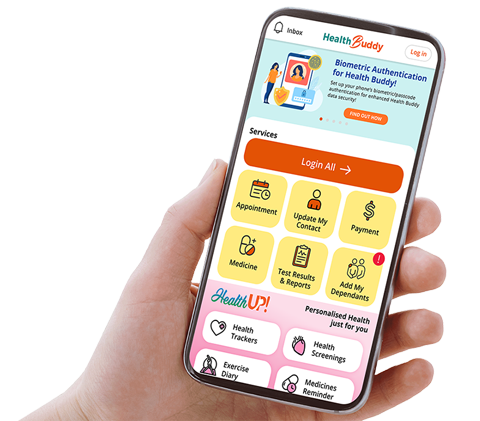
Stay Healthy The Easy Way

Get trusted health advice, offers and more.
Stay Ahead in Healthcare Industry

Subscribe to our exclusive updates for healthcare professionals.













Stay Healthy With
 HealthXchange
 Health Videos
Follow KKH


© 2026 KK Women's and Children's Hospital Pte Ltd. All Rights Reserved.